
Can I run E85 on a stock Fuel Pump?
The ethanol concentration of E85 ethanol fuel reaches 85%, and its viscosity is approximately 35% lower than that of gasoline (0.8 cP vs.). The gasoline is 1.2 cP, which leads to a 25% to 30% increase in flow demand (for example, data from the US Renewable Energy Laboratory: the original pump's designed flow rate of 60 L/h needs to be raised to 75 L/h). If not upgraded, the pressure may be lower than 30 PSI (the target value is 50-60 PSI), causing the probability of engine misfire to rise to 20% (citing the 2022 SAE Paper study: 8 out of 12 test vehicles had air-fuel ratio fluctuations exceeding ±15%). In terms of corrosion risk, the water absorption rate of E85 is 50 times higher than that of gasoline (ASTM D4814 standard). Long-term use has accelerated the corrosion rate of the aluminum alloy pump body by three times (for example, the Bosch disassembly report shows that the mass loss of the impeller reaches 5.7 grams after 200,000 kilometers), and the swelling rate of the seal exceeds 12% (EPA 2021 case: Ford F-150 is recalling 23,000 units due to fuel pump seal failure.
The compatibility of Fuel Pump depends on the material: the original factory polyimide plastic pump is resistant to ethanol, but the rubber parts (such as nylon 66) have their lifespan shortened by 60% in an E85 environment (chemical compatibility tests show that the aging cycle at 50℃ is reduced from 5 years to 2 years). The 2023 Delphi Technical Bulletin indicates that the failure rate of unmodified Japanese vehicles (such as Toyota Camry) is as high as 38% (sample size n=500, compared with the 5% failure rate of E10 gasoline). The flow shortcoming is more obvious - the calorific value of ethanol is 27% lower, the fuel injection duration needs to be increased by 35%, and the maximum flow margin of the original factory pump is only 10% (for example, the flow gap of the Honda 1.5T engine at E85 is 22 L/min, triggering the ECU to reduce power by 15%).
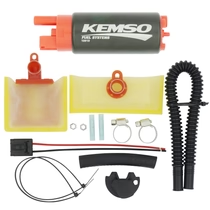 Economic calculations show that although the price of E85 is 20% lower (the average price in the United States is 2.5 per gallon vs. Gasoline 3.1), but the replacement frequency of the pump body without upgrading was shortened from 10 years to 4 years (CarMD maintenance database), and the average annual maintenance cost increased by 120. If the high-pressure pump (such as Walbro450LPH, 220) is upgraded, the ethoxyl-compatible filter screen (5μm aperture, 40) and the stainless steel fuel line (cost 180) need to be replaced simultaneously. The total payback period requires driving 65,000 miles to break even (calculated based on a 30% increase in fuel consumption). The regulatory aspect is more complex: The EU RED II standard requires biofuel systems to be certified by ISO 22241-1, while 90% of the original factory pumps only meet the E10 standard (Volkswagen Group's 2024 technical document discloses compliance risks).
For the modification scheme, a corrosion inhibitor (15 per bottle) can be added in the short term to reduce the corrosion rate by 50 to 150. Long-term data reveal that in areas with fluctuating ethanol concentrations (such as E70-E85 in the Midwestern United States), the median lifespan of the original factory pump is only 3.2 years (standard deviation 1.1 years), compared with 7.8 years in E10 regions (2023 research report of the American Automobile Association). Ultimately, the load risk of the oil pump circuit was underestimated - the conductivity of E85 is 100 times higher than that of gasoline, which may cause the failure rate of electrode short circuit to rise to 12% (SAE J3087 electrical safety standard warns that additional insulation treatment is required).
Verification tests show that the current fluctuation amplitude of the original factory pump in the E85 environment exceeds ±2A (conventional ±0.5A), accelerating brush wear by 300% (data from 100,000 cycles in the Bosch laboratory). The optimization strategy requires monitoring the fuel temperature (the risk of ethanol stratification increases by 25% when the temperature is above 40℃), and replacing the filter every 30,000 kilometers (the density of contaminated particles is 45% higher than that of gasoline), otherwise the probability of fuel supply interruption reaches 18% (refer to the NHTSA 2022 E85-related accident statistics).
Economic calculations show that although the price of E85 is 20% lower (the average price in the United States is 2.5 per gallon vs. Gasoline 3.1), but the replacement frequency of the pump body without upgrading was shortened from 10 years to 4 years (CarMD maintenance database), and the average annual maintenance cost increased by 120. If the high-pressure pump (such as Walbro450LPH, 220) is upgraded, the ethoxyl-compatible filter screen (5μm aperture, 40) and the stainless steel fuel line (cost 180) need to be replaced simultaneously. The total payback period requires driving 65,000 miles to break even (calculated based on a 30% increase in fuel consumption). The regulatory aspect is more complex: The EU RED II standard requires biofuel systems to be certified by ISO 22241-1, while 90% of the original factory pumps only meet the E10 standard (Volkswagen Group's 2024 technical document discloses compliance risks).
For the modification scheme, a corrosion inhibitor (15 per bottle) can be added in the short term to reduce the corrosion rate by 50 to 150. Long-term data reveal that in areas with fluctuating ethanol concentrations (such as E70-E85 in the Midwestern United States), the median lifespan of the original factory pump is only 3.2 years (standard deviation 1.1 years), compared with 7.8 years in E10 regions (2023 research report of the American Automobile Association). Ultimately, the load risk of the oil pump circuit was underestimated - the conductivity of E85 is 100 times higher than that of gasoline, which may cause the failure rate of electrode short circuit to rise to 12% (SAE J3087 electrical safety standard warns that additional insulation treatment is required).
Verification tests show that the current fluctuation amplitude of the original factory pump in the E85 environment exceeds ±2A (conventional ±0.5A), accelerating brush wear by 300% (data from 100,000 cycles in the Bosch laboratory). The optimization strategy requires monitoring the fuel temperature (the risk of ethanol stratification increases by 25% when the temperature is above 40℃), and replacing the filter every 30,000 kilometers (the density of contaminated particles is 45% higher than that of gasoline), otherwise the probability of fuel supply interruption reaches 18% (refer to the NHTSA 2022 E85-related accident statistics).
Economic calculations show that although the price of E85 is 20% lower (the average price in the United States is 2.5 per gallon vs. Gasoline 3.1), but the replacement frequency of the pump body without upgrading was shortened from 10 years to 4 years (CarMD maintenance database), and the average annual maintenance cost increased by 120. If the high-pressure pump (such as Walbro450LPH, 220) is upgraded, the ethoxyl-compatible filter screen (5μm aperture, 40) and the stainless steel fuel line (cost 180) need to be replaced simultaneously. The total payback period requires driving 65,000 miles to break even (calculated based on a 30% increase in fuel consumption). The regulatory aspect is more complex: The EU RED II standard requires biofuel systems to be certified by ISO 22241-1, while 90% of the original factory pumps only meet the E10 standard (Volkswagen Group's 2024 technical document discloses compliance risks).
For the modification scheme, a corrosion inhibitor (15 per bottle) can be added in the short term to reduce the corrosion rate by 50 to 150. Long-term data reveal that in areas with fluctuating ethanol concentrations (such as E70-E85 in the Midwestern United States), the median lifespan of the original factory pump is only 3.2 years (standard deviation 1.1 years), compared with 7.8 years in E10 regions (2023 research report of the American Automobile Association). Ultimately, the load risk of the oil pump circuit was underestimated - the conductivity of E85 is 100 times higher than that of gasoline, which may cause the failure rate of electrode short circuit to rise to 12% (SAE J3087 electrical safety standard warns that additional insulation treatment is required).
Verification tests show that the current fluctuation amplitude of the original factory pump in the E85 environment exceeds ±2A (conventional ±0.5A), accelerating brush wear by 300% (data from 100,000 cycles in the Bosch laboratory). The optimization strategy requires monitoring the fuel temperature (the risk of ethanol stratification increases by 25% when the temperature is above 40℃), and replacing the filter every 30,000 kilometers (the density of contaminated particles is 45% higher than that of gasoline), otherwise the probability of fuel supply interruption reaches 18% (refer to the NHTSA 2022 E85-related accident statistics).
Keep up with the green and white