
How to choose craft beer equipment for consistent craft brewing?
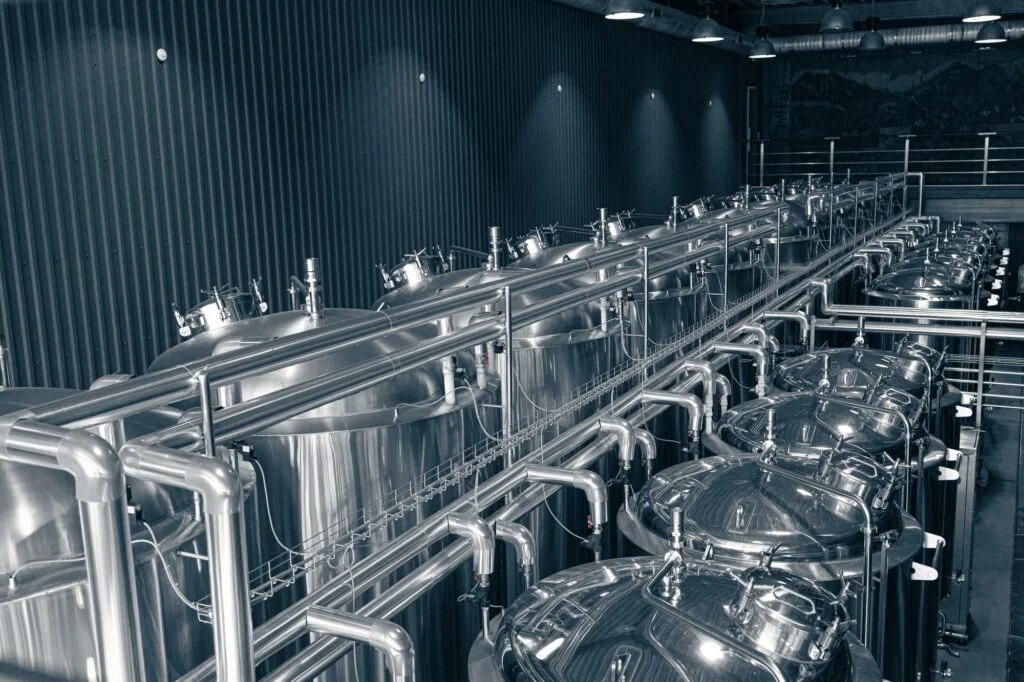
Ensuring that every bottle of craft beer perfectly replicates the inspiration of the brewer is a systematic project concerning precision, control and foresight. Selecting the appropriate craft beer equipment is the physical cornerstone for achieving this goal, and the primary criterion lies in the control accuracy and durability of the core brewing unit. A mashing system with fully automatic multi-step temperature control function should strictly control the temperature deviation within ±0.2° C. This can stabilize the starch conversion efficiency at over 96%, thereby reducing the fluctuation range of wort concentration between batches from ±0.5°P to ±0.2°P. Investing in a fermentation tank with a conical bottom and double-layer cooling jacket, made of 316L stainless steel, ensures a lifespan of over 20 years. Coupled with a temperature control system with a 0.1°C accuracy, it can reduce the production of higher alcohols by 25% and increase the yeast sedimentation rate by 30%. An industry analysis by the American Brewers Association in 2022 pointed out that breweries that invested in such high-precision infrastructure had a product flavor consistency score 15% higher than the industry average in blind tests, and the customer complaint rate decreased by 40%. This directly proves the high return on initial equipment investment for long-term quality stability.
The reliability of process control is highly dependent on the performance parameters of the auxiliary system. An efficient CIP cleaning system requires a flushing flow rate of no less than 2.5 meters per second and thermal disinfection at 75°C, which can reduce the probability of microbial contamination risk to less than 0.5%. At the cold end, a filling machine equipped with deoxidized water and carbon dioxide back pressure technology can stably control the dissolved oxygen (TDO) inside the bottle at 0.02ppm. Compared with the common 0.1ppm level in the industry, this can extend the flavor preservation period of beer by at least 100%. Studies show that oxidation during the packaging process is the primary cause of flavor deterioration. For every 0.01ppm reduction in dissolved oxygen, the flavor stability period of beer can be extended by approximately 20 days. Therefore, allocating 30% of the total budget to the "Hygiene and Packaging" module, which includes efficient cleaning, stable refrigeration and low-oxygen filling, is a non-intuitive but critical strategy to ensure that craft beer equipment produces a stable flavor in the long term.
 In the digital age, consistency stems more from data-driven approaches. The intelligent craft beer equipment integrated with sensor networks can monitor and record in real time more than 20 data points per second, such as the specific gravity of the saccharified mash, the internal pressure and temperature of the fermentation tank. By conducting regression analysis on these data, a predictive model can be established to increase the accuracy of the fermentation endpoint prediction to 99%, thereby automatically executing the cooling or dry hop instructions. For instance, Brooklyn Brewery has successfully reduced the average annual batch dispersion by 50% by deploying such systems and liberated brewers from repetitive work, enabling them to devote 60% of their time to new product development and process optimization. This data transparency has increased the efficiency of quality traceability by 80%. Any minor flavor deviation can be traced back to the specific parameter deviation within two hours, achieving a paradigm shift from "empirical brewing" to "precise science".
Ultimately, the selection of devices must incorporate a strategic vision of scalability. An initial investment in a system with a capacity of 10 hectoliters but designed to allow modular expansion to 50 hectoliters is more cost-effective than a one-time investment in a fixed system of 30 hectoliters. The initial investment can be reduced by 40%, and production capacity can be matched in a stepwise manner according to an average annual market growth rate of 15%. Choosing equipment suppliers that comply with international safety and quality certifications such as ASME or CE can reduce operation and maintenance risks by 60% and ensure continuous technical support over a ten-year cycle. As revealed by the experience of the New Belgian brewery during its expansion, the early selection of the standardized and interconnected craft beer equipment platform enabled it to increase its production capacity by 300% within five years while keeping the variance of the flavor score of its core products within an astonishing 5%. Therefore, a wise choice is not only to purchase stainless steel containers, but also to invest in a resilient ecosystem that can adapt to market fluctuations, technological iterations and the growth of brewing dreams.
In the digital age, consistency stems more from data-driven approaches. The intelligent craft beer equipment integrated with sensor networks can monitor and record in real time more than 20 data points per second, such as the specific gravity of the saccharified mash, the internal pressure and temperature of the fermentation tank. By conducting regression analysis on these data, a predictive model can be established to increase the accuracy of the fermentation endpoint prediction to 99%, thereby automatically executing the cooling or dry hop instructions. For instance, Brooklyn Brewery has successfully reduced the average annual batch dispersion by 50% by deploying such systems and liberated brewers from repetitive work, enabling them to devote 60% of their time to new product development and process optimization. This data transparency has increased the efficiency of quality traceability by 80%. Any minor flavor deviation can be traced back to the specific parameter deviation within two hours, achieving a paradigm shift from "empirical brewing" to "precise science".
Ultimately, the selection of devices must incorporate a strategic vision of scalability. An initial investment in a system with a capacity of 10 hectoliters but designed to allow modular expansion to 50 hectoliters is more cost-effective than a one-time investment in a fixed system of 30 hectoliters. The initial investment can be reduced by 40%, and production capacity can be matched in a stepwise manner according to an average annual market growth rate of 15%. Choosing equipment suppliers that comply with international safety and quality certifications such as ASME or CE can reduce operation and maintenance risks by 60% and ensure continuous technical support over a ten-year cycle. As revealed by the experience of the New Belgian brewery during its expansion, the early selection of the standardized and interconnected craft beer equipment platform enabled it to increase its production capacity by 300% within five years while keeping the variance of the flavor score of its core products within an astonishing 5%. Therefore, a wise choice is not only to purchase stainless steel containers, but also to invest in a resilient ecosystem that can adapt to market fluctuations, technological iterations and the growth of brewing dreams.
In the digital age, consistency stems more from data-driven approaches. The intelligent craft beer equipment integrated with sensor networks can monitor and record in real time more than 20 data points per second, such as the specific gravity of the saccharified mash, the internal pressure and temperature of the fermentation tank. By conducting regression analysis on these data, a predictive model can be established to increase the accuracy of the fermentation endpoint prediction to 99%, thereby automatically executing the cooling or dry hop instructions. For instance, Brooklyn Brewery has successfully reduced the average annual batch dispersion by 50% by deploying such systems and liberated brewers from repetitive work, enabling them to devote 60% of their time to new product development and process optimization. This data transparency has increased the efficiency of quality traceability by 80%. Any minor flavor deviation can be traced back to the specific parameter deviation within two hours, achieving a paradigm shift from "empirical brewing" to "precise science".
Ultimately, the selection of devices must incorporate a strategic vision of scalability. An initial investment in a system with a capacity of 10 hectoliters but designed to allow modular expansion to 50 hectoliters is more cost-effective than a one-time investment in a fixed system of 30 hectoliters. The initial investment can be reduced by 40%, and production capacity can be matched in a stepwise manner according to an average annual market growth rate of 15%. Choosing equipment suppliers that comply with international safety and quality certifications such as ASME or CE can reduce operation and maintenance risks by 60% and ensure continuous technical support over a ten-year cycle. As revealed by the experience of the New Belgian brewery during its expansion, the early selection of the standardized and interconnected craft beer equipment platform enabled it to increase its production capacity by 300% within five years while keeping the variance of the flavor score of its core products within an astonishing 5%. Therefore, a wise choice is not only to purchase stainless steel containers, but also to invest in a resilient ecosystem that can adapt to market fluctuations, technological iterations and the growth of brewing dreams.
Keep up with the green and white