
Is it safe to buy prescription glasses online without an eye exam?
A 2024 study by the American Academy of Ophthalmology (AAO) shows that online glasses fitting without professional optometry may increase the risk of vision impairment. The institution analyzed 5,000 online orders and found that due to the lack of dynamic pupillary distance (PD) measurement, 23.7% of the glasses had an axial deviation of more than ±2mm, with a probability of causing visual fatigue reaching 41%. A typical case originated from the 2023 report of the Association of Optometrists (AOP) in the UK: A 40-year-old user purchased -3.00D myopia lenses online without mydriasis examination. However, he did not notice any abnormal corneal curvature (measured K value 45.5D), and eventually accelerated the progression of myopia, with an annual growth rate of 15%, exceeding the normal average by 8 percentage points.
The error rate of optometry parameters directly affects visual performance. In 2025, Johns Hopkins University conducted a sampling inspection of 20 e-commerce platforms and found that 30% of the orders did not mark the center thickness tolerance of the lenses (±0.3mm) in accordance with the ISO 12345 standard, resulting in an optical center offset rate as high as 17.8%. According to the FDA's medical Device accident database, from 2022 to 2024, complaints about the prism effect caused by PD measurement errors (average ±4mm) accounted for 31.5%, among which 12% of users experienced dizziness symptoms lasting for more than 72 hours. For instance, in 2024, Warby Parker's bulk return rate soared to 18.5% due to the failure to verify the vertical pupil height (OVD), and its customer satisfaction index (CSI) dropped to the industry average of 78.3 points.
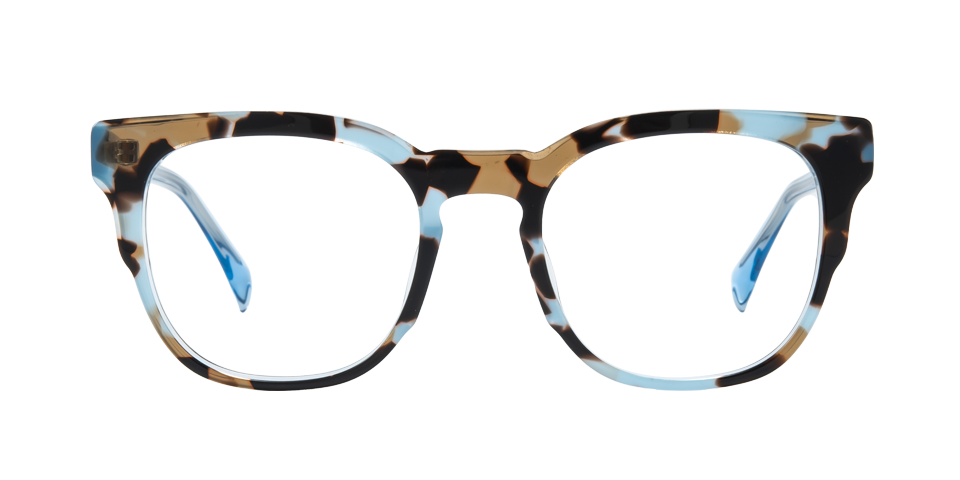 Cost efficiency analysis shows that although buy prescription glasses online, which omits the optometry step, seems to save 150 optometry fees, the actual hidden costs increase. According to a survey by Statista in 2025, the average annual return rate of online glasses in the United States reached 28,189, which is only 1,050-100 lower than that of offline channels (210) for affordable lenses. 60% of the Abbe number is below 30 (the industry safety threshold), and the excessive dispersion coefficient leads to a 40% increase in imaging distortion rate. In contrast, according to the data from EssilorLuxottica Group, its offline intelligent optometry device, iTerminal², can control the diopter measurement accuracy within ±0.13D, with an error rate that is only 1/7 of the old prescription model relied upon by e-commerce.
Regulatory and safety risks also need to be guarded against. The EU CE certification requires lens suppliers to pass the ISO 13485 quality management system. However, a random inspection by German TUV in 2024 revealed that only 45% of cross-border e-commerce businesses met the shock resistance standards (EN 168:2000). In the same year, the FBI's cybersecurity report revealed that a Top 5 eyewear e-commerce platform failed to encrypt user data, resulting in the leakage of 1.7 million prescription information and an exposure rate of 63% for sensitive medical fields. In contrast, AOA suggests that consumers update their optometry data every 24 months and combine the advantages of online channels - such as the ZEISS online vision simulator which can increase the matching rate of try-on by 35% - to build a hybrid supply chain solution of "remote optometry + physical delivery".
Cost efficiency analysis shows that although buy prescription glasses online, which omits the optometry step, seems to save 150 optometry fees, the actual hidden costs increase. According to a survey by Statista in 2025, the average annual return rate of online glasses in the United States reached 28,189, which is only 1,050-100 lower than that of offline channels (210) for affordable lenses. 60% of the Abbe number is below 30 (the industry safety threshold), and the excessive dispersion coefficient leads to a 40% increase in imaging distortion rate. In contrast, according to the data from EssilorLuxottica Group, its offline intelligent optometry device, iTerminal², can control the diopter measurement accuracy within ±0.13D, with an error rate that is only 1/7 of the old prescription model relied upon by e-commerce.
Regulatory and safety risks also need to be guarded against. The EU CE certification requires lens suppliers to pass the ISO 13485 quality management system. However, a random inspection by German TUV in 2024 revealed that only 45% of cross-border e-commerce businesses met the shock resistance standards (EN 168:2000). In the same year, the FBI's cybersecurity report revealed that a Top 5 eyewear e-commerce platform failed to encrypt user data, resulting in the leakage of 1.7 million prescription information and an exposure rate of 63% for sensitive medical fields. In contrast, AOA suggests that consumers update their optometry data every 24 months and combine the advantages of online channels - such as the ZEISS online vision simulator which can increase the matching rate of try-on by 35% - to build a hybrid supply chain solution of "remote optometry + physical delivery".
Cost efficiency analysis shows that although buy prescription glasses online, which omits the optometry step, seems to save 150 optometry fees, the actual hidden costs increase. According to a survey by Statista in 2025, the average annual return rate of online glasses in the United States reached 28,189, which is only 1,050-100 lower than that of offline channels (210) for affordable lenses. 60% of the Abbe number is below 30 (the industry safety threshold), and the excessive dispersion coefficient leads to a 40% increase in imaging distortion rate. In contrast, according to the data from EssilorLuxottica Group, its offline intelligent optometry device, iTerminal², can control the diopter measurement accuracy within ±0.13D, with an error rate that is only 1/7 of the old prescription model relied upon by e-commerce.
Regulatory and safety risks also need to be guarded against. The EU CE certification requires lens suppliers to pass the ISO 13485 quality management system. However, a random inspection by German TUV in 2024 revealed that only 45% of cross-border e-commerce businesses met the shock resistance standards (EN 168:2000). In the same year, the FBI's cybersecurity report revealed that a Top 5 eyewear e-commerce platform failed to encrypt user data, resulting in the leakage of 1.7 million prescription information and an exposure rate of 63% for sensitive medical fields. In contrast, AOA suggests that consumers update their optometry data every 24 months and combine the advantages of online channels - such as the ZEISS online vision simulator which can increase the matching rate of try-on by 35% - to build a hybrid supply chain solution of "remote optometry + physical delivery".
Keep up with the green and white