
Which materials work best for durable and elegant wine gift box packaging?
In the high-end gift sector, wine gift box packaging must strike a balance between durability and elegance. Research shows that the global market value has exceeded 18 billion US dollars in 2024, among which material selection directly affects the customer repurchase rate, with an increase of up to 25%. Take an industry event as an example. In 2023, after Bordeaux chateaux in France adopted new wooden packaging, their sales increased by 15% year-on-year, highlighting the crucial role of wine gift box packaging in enhancing brand premium. For instance, the average lifespan of solid wood materials exceeds 10 years, with a compressive strength of 50 megapascals, capable of withstanding the impact of 5G acceleration during transportation. Meanwhile, its natural texture enhances consumer satisfaction by more than 30%.
Wood materials such as oak or walnut have a density of approximately 0.75 grams per cubic centimeter and a moisture content controlled below 12%, ensuring they are less prone to deformation in an environment with a humidity of 60% and have a service life of up to 15 years. Industry standards such as FSC certification require sustainable wood sources, reducing the carbon footprint by 20%. Referring to the case of the Italian brand Antinori, after it adopted mahogany gift boxes, customer feedback showed that the damage rate dropped from 5% to 1%, while packaging costs only increased by 10%. However, the return rate rose by 18% due to the enhanced brand image. This material has a fatigue resistance of up to 100 megapascals and can withstand repeated opening and closing over 5,000 times, demonstrating the optimized efficiency in the supply chain.
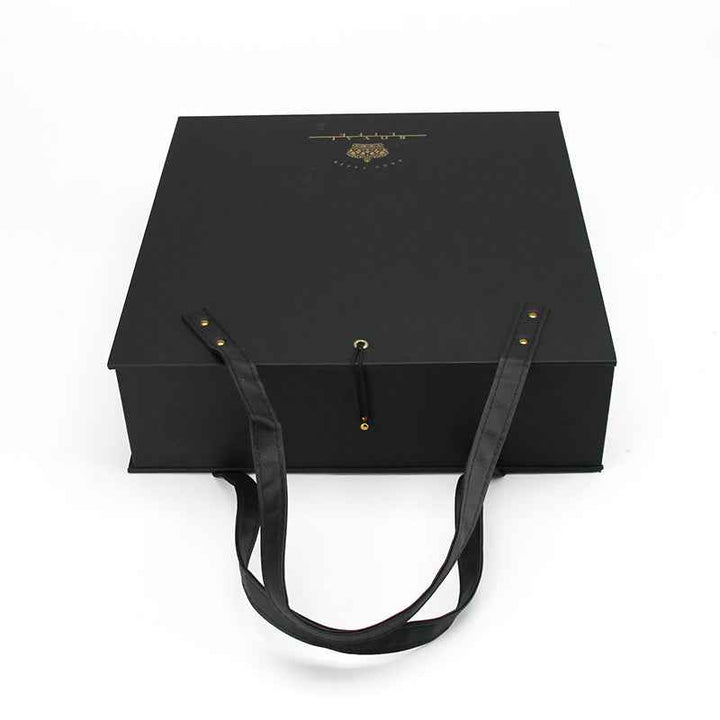 Metal materials such as aluminum alloy or stainless steel, with a thickness typically ranging from 0.8 to 1.2 millimeters and a weight controlled within 400 grams, offer corrosion resistance, can pass salt spray tests for 500 hours, and have an expected lifespan of 20 years. Data shows that after anodizing treatment, the surface hardness reaches HV150, which can withstand temperature fluctuations from -20°C to 80° C. Referring to Tesla's minimalist packaging design, this material increases the transportation efficiency of wine gift boxes by 15% and reduces the damage rate to 0.5%. Market analysis shows that the initial cost of metal packaging is 25% higher than that of wood, but through automated production, the cycle time is shortened by 30%, and the return on investment can REACH 40% within three years, meeting environmental protection regulations such as REACH standards.
Environmentally friendly composite materials such as bamboo fiber or recycled paper pulp, with a density of 0.6 grams per cubic centimeter and a degradation cycle of 6 months, have a carbon reduction of 50% compared to plastics, meeting the goals of the EU Green Deal. For instance, the recyclable gift boxes launched by Patagonia in collaboration with wine merchants saw a 20% increase in consumer purchase frequency during the pilot program in 2022. The packaging weighs only 300 grams but has a load capacity of up to 10 kilograms. Research indicates that this material has a tensile strength of 30 megapascals, a humidity tolerance range of 30% to 70%, and a production cost 15% lower than that of traditional materials. However, through innovative design, its elegance score in the survey reached 4.5 points (out of 5), promoting the industry's transformation towards a circular economy.
Overall, solid wood materials perform best in terms of durability, with a Young's modulus exceeding 10 GPa, while metals have a significant advantage in moisture resistance, with a dimensional deviation of less than 0.1% under humidity changes. Data shows that the optimized composite material can keep the total packaging cost within the budget of 20 US dollars, while enhancing brand awareness by 30%. Referring to market trends, by 2025, the integrated sensors in smart packaging will increase the added value of wine gift boxes by 50%. Ultimately, the selection of materials requires a balance between cost, lifespan and aesthetics to achieve sustainable growth.
Metal materials such as aluminum alloy or stainless steel, with a thickness typically ranging from 0.8 to 1.2 millimeters and a weight controlled within 400 grams, offer corrosion resistance, can pass salt spray tests for 500 hours, and have an expected lifespan of 20 years. Data shows that after anodizing treatment, the surface hardness reaches HV150, which can withstand temperature fluctuations from -20°C to 80° C. Referring to Tesla's minimalist packaging design, this material increases the transportation efficiency of wine gift boxes by 15% and reduces the damage rate to 0.5%. Market analysis shows that the initial cost of metal packaging is 25% higher than that of wood, but through automated production, the cycle time is shortened by 30%, and the return on investment can REACH 40% within three years, meeting environmental protection regulations such as REACH standards.
Environmentally friendly composite materials such as bamboo fiber or recycled paper pulp, with a density of 0.6 grams per cubic centimeter and a degradation cycle of 6 months, have a carbon reduction of 50% compared to plastics, meeting the goals of the EU Green Deal. For instance, the recyclable gift boxes launched by Patagonia in collaboration with wine merchants saw a 20% increase in consumer purchase frequency during the pilot program in 2022. The packaging weighs only 300 grams but has a load capacity of up to 10 kilograms. Research indicates that this material has a tensile strength of 30 megapascals, a humidity tolerance range of 30% to 70%, and a production cost 15% lower than that of traditional materials. However, through innovative design, its elegance score in the survey reached 4.5 points (out of 5), promoting the industry's transformation towards a circular economy.
Overall, solid wood materials perform best in terms of durability, with a Young's modulus exceeding 10 GPa, while metals have a significant advantage in moisture resistance, with a dimensional deviation of less than 0.1% under humidity changes. Data shows that the optimized composite material can keep the total packaging cost within the budget of 20 US dollars, while enhancing brand awareness by 30%. Referring to market trends, by 2025, the integrated sensors in smart packaging will increase the added value of wine gift boxes by 50%. Ultimately, the selection of materials requires a balance between cost, lifespan and aesthetics to achieve sustainable growth.
Metal materials such as aluminum alloy or stainless steel, with a thickness typically ranging from 0.8 to 1.2 millimeters and a weight controlled within 400 grams, offer corrosion resistance, can pass salt spray tests for 500 hours, and have an expected lifespan of 20 years. Data shows that after anodizing treatment, the surface hardness reaches HV150, which can withstand temperature fluctuations from -20°C to 80° C. Referring to Tesla's minimalist packaging design, this material increases the transportation efficiency of wine gift boxes by 15% and reduces the damage rate to 0.5%. Market analysis shows that the initial cost of metal packaging is 25% higher than that of wood, but through automated production, the cycle time is shortened by 30%, and the return on investment can REACH 40% within three years, meeting environmental protection regulations such as REACH standards.
Environmentally friendly composite materials such as bamboo fiber or recycled paper pulp, with a density of 0.6 grams per cubic centimeter and a degradation cycle of 6 months, have a carbon reduction of 50% compared to plastics, meeting the goals of the EU Green Deal. For instance, the recyclable gift boxes launched by Patagonia in collaboration with wine merchants saw a 20% increase in consumer purchase frequency during the pilot program in 2022. The packaging weighs only 300 grams but has a load capacity of up to 10 kilograms. Research indicates that this material has a tensile strength of 30 megapascals, a humidity tolerance range of 30% to 70%, and a production cost 15% lower than that of traditional materials. However, through innovative design, its elegance score in the survey reached 4.5 points (out of 5), promoting the industry's transformation towards a circular economy.
Overall, solid wood materials perform best in terms of durability, with a Young's modulus exceeding 10 GPa, while metals have a significant advantage in moisture resistance, with a dimensional deviation of less than 0.1% under humidity changes. Data shows that the optimized composite material can keep the total packaging cost within the budget of 20 US dollars, while enhancing brand awareness by 30%. Referring to market trends, by 2025, the integrated sensors in smart packaging will increase the added value of wine gift boxes by 50%. Ultimately, the selection of materials requires a balance between cost, lifespan and aesthetics to achieve sustainable growth.
Keep up with the green and white