
How Can Electrical Cabinet Cooling Improve Equipment Life?
In industrial environments, for every 10°C increase in the internal temperature of electrical cabinets, the expected lifespan of electronic components within them may be reduced by up to 50%. For instance, according to a study by IEEE, when a frequency converter operates continuously at 85°C instead of 75°C, the aging rate of its insulation material will double, resulting in the mean time between failures (MTBF) shortening from 15 years to less than 8 years. The production line of a certain automobile manufacturing plant once experienced an unexpected downtime of over 120 hours throughout the year due to overheating of servo drives, directly resulting in a production capacity loss of approximately 2 million yuan. By installing the active electrical cabinet cooling system and stably controlling the temperature inside the cabinet at 35°C±2°C, the equipment failure rate decreased by 60%, and at the same time, the energy efficiency increased by 12%.
The performance differences among various cooling schemes are significant. The cost of the traditional fan filter component is approximately 2,000 yuan, but it is only suitable for applications with a heat load of less than 500W and a clean environment. When the sealed cabinet adopts the air conditioning cooling solution, although the initial investment increases to 12,000 yuan, it can handle a heat load of 2000W and maintain an IP54 protection level. Due to the dual effects of salt spray corrosion and high temperature, the annual replacement rate of capacitors in the converter cabinet of a certain coastal wind farm has reached as high as 30%. After installing the anti-corrosion type cabinet top air conditioner, the internal humidity has always been below 45%RH, the lifespan of components has been extended to 2.3 times the original value, and the payback period of investment is only 11 months.
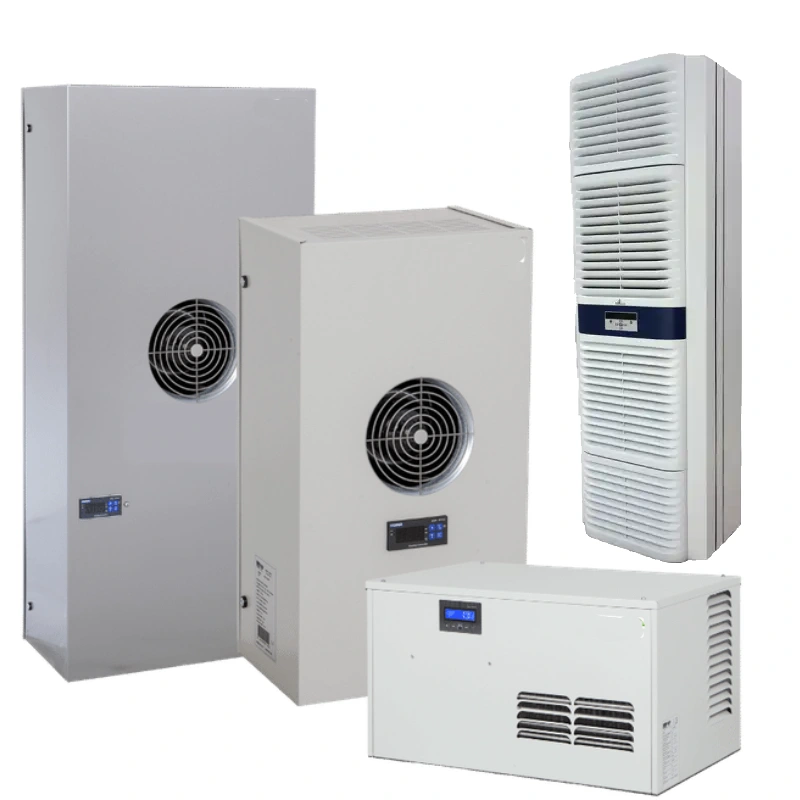 The harm of temperature fluctuations to connectors and relays is often underestimated. Experimental data show that when the temperature inside the cabinet fluctuates at a rate of 2°C per minute, the probability of thermal fatigue failure of solder joints increases fourfold. Due to the temperature difference between day and night, condensation occurred in the PLC control cabinet of a certain semiconductor factory, causing the circuit boards to migrate and corrode. The average annual maintenance cost reached 800,000 yuan. After adopting the intelligent cooling system with temperature and humidity feedback, the temperature fluctuation is controlled within ±0.5°C, the board card replacement cycle is extended from 18 months to 5 years, and the annual maintenance cost is saved by 67%.
From the perspective of full life cycle cost analysis, high-quality cooling solutions can bring significant returns. Take the power distribution cabinet in the data center as an example. Although the installation of heat pipe heat exchangers increases the initial investment by 8,000 yuan per cabinet, compared with the traditional compressor refrigeration solution, energy consumption is reduced by 40%, and electricity costs can be saved by more than 60,000 yuan within a 10-year operation period. ABB's case shows that after its frequency conversion cabinet with active cooling technology was continuously operated in the steel plant for seven years, the failure rate of power devices was still less than 0.02%, which was far better than the industry average of 0.1%. This temperature management strategy extends the life cycle of equipment assets by more than 35% while reducing the carbon footprint by 28%.
The harm of temperature fluctuations to connectors and relays is often underestimated. Experimental data show that when the temperature inside the cabinet fluctuates at a rate of 2°C per minute, the probability of thermal fatigue failure of solder joints increases fourfold. Due to the temperature difference between day and night, condensation occurred in the PLC control cabinet of a certain semiconductor factory, causing the circuit boards to migrate and corrode. The average annual maintenance cost reached 800,000 yuan. After adopting the intelligent cooling system with temperature and humidity feedback, the temperature fluctuation is controlled within ±0.5°C, the board card replacement cycle is extended from 18 months to 5 years, and the annual maintenance cost is saved by 67%.
From the perspective of full life cycle cost analysis, high-quality cooling solutions can bring significant returns. Take the power distribution cabinet in the data center as an example. Although the installation of heat pipe heat exchangers increases the initial investment by 8,000 yuan per cabinet, compared with the traditional compressor refrigeration solution, energy consumption is reduced by 40%, and electricity costs can be saved by more than 60,000 yuan within a 10-year operation period. ABB's case shows that after its frequency conversion cabinet with active cooling technology was continuously operated in the steel plant for seven years, the failure rate of power devices was still less than 0.02%, which was far better than the industry average of 0.1%. This temperature management strategy extends the life cycle of equipment assets by more than 35% while reducing the carbon footprint by 28%.
The harm of temperature fluctuations to connectors and relays is often underestimated. Experimental data show that when the temperature inside the cabinet fluctuates at a rate of 2°C per minute, the probability of thermal fatigue failure of solder joints increases fourfold. Due to the temperature difference between day and night, condensation occurred in the PLC control cabinet of a certain semiconductor factory, causing the circuit boards to migrate and corrode. The average annual maintenance cost reached 800,000 yuan. After adopting the intelligent cooling system with temperature and humidity feedback, the temperature fluctuation is controlled within ±0.5°C, the board card replacement cycle is extended from 18 months to 5 years, and the annual maintenance cost is saved by 67%.
From the perspective of full life cycle cost analysis, high-quality cooling solutions can bring significant returns. Take the power distribution cabinet in the data center as an example. Although the installation of heat pipe heat exchangers increases the initial investment by 8,000 yuan per cabinet, compared with the traditional compressor refrigeration solution, energy consumption is reduced by 40%, and electricity costs can be saved by more than 60,000 yuan within a 10-year operation period. ABB's case shows that after its frequency conversion cabinet with active cooling technology was continuously operated in the steel plant for seven years, the failure rate of power devices was still less than 0.02%, which was far better than the industry average of 0.1%. This temperature management strategy extends the life cycle of equipment assets by more than 35% while reducing the carbon footprint by 28%.
Keep up with the green and white